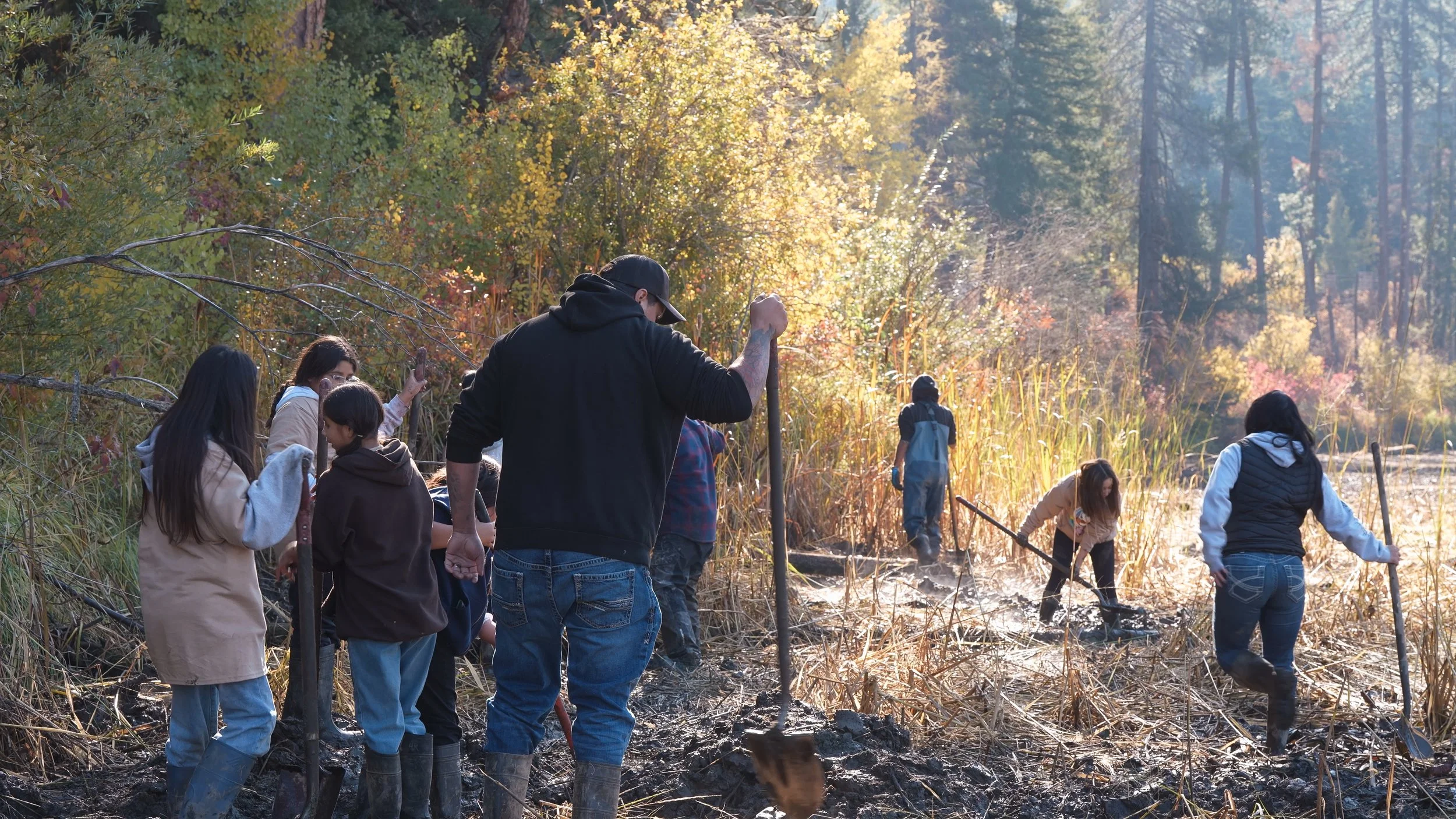
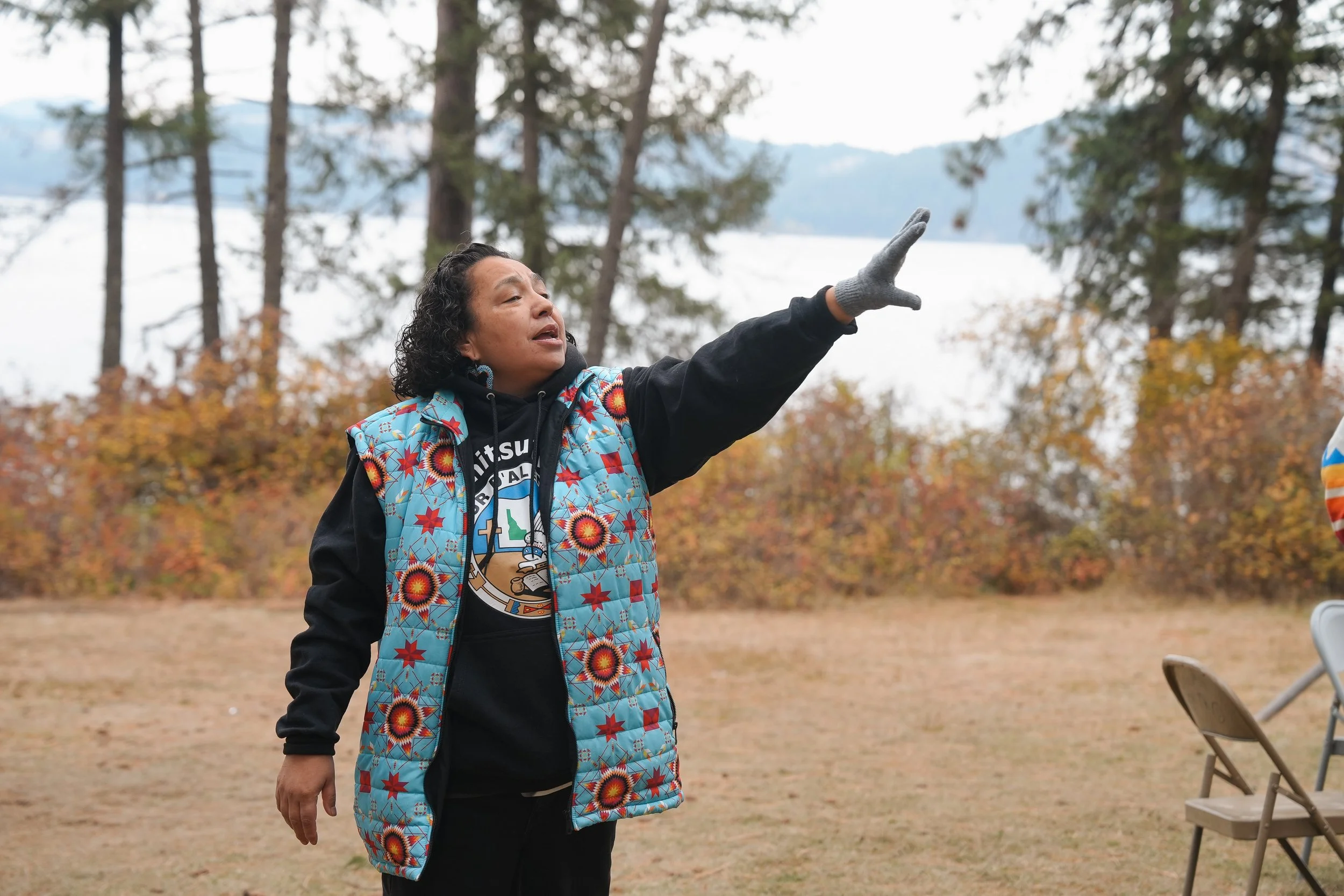
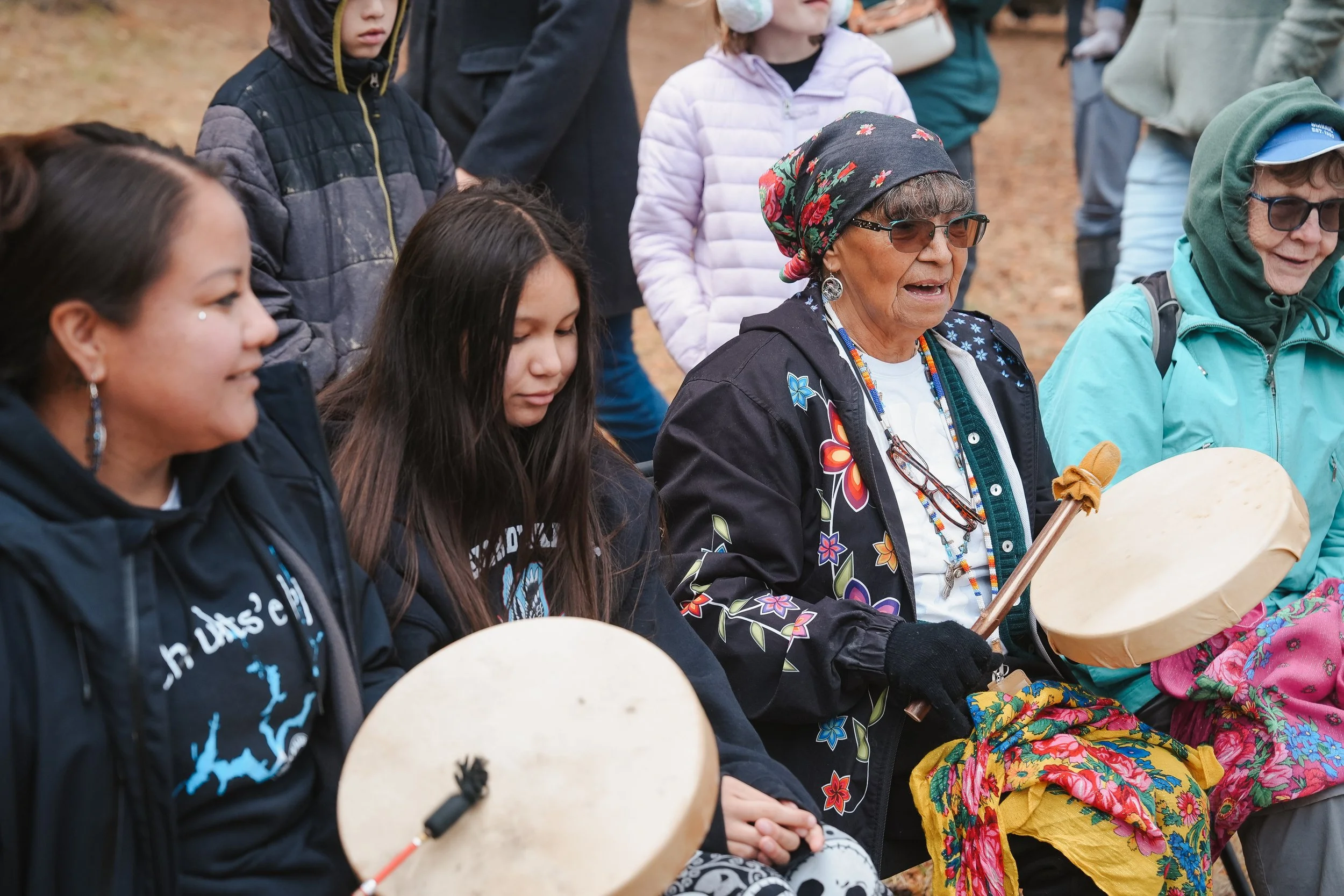
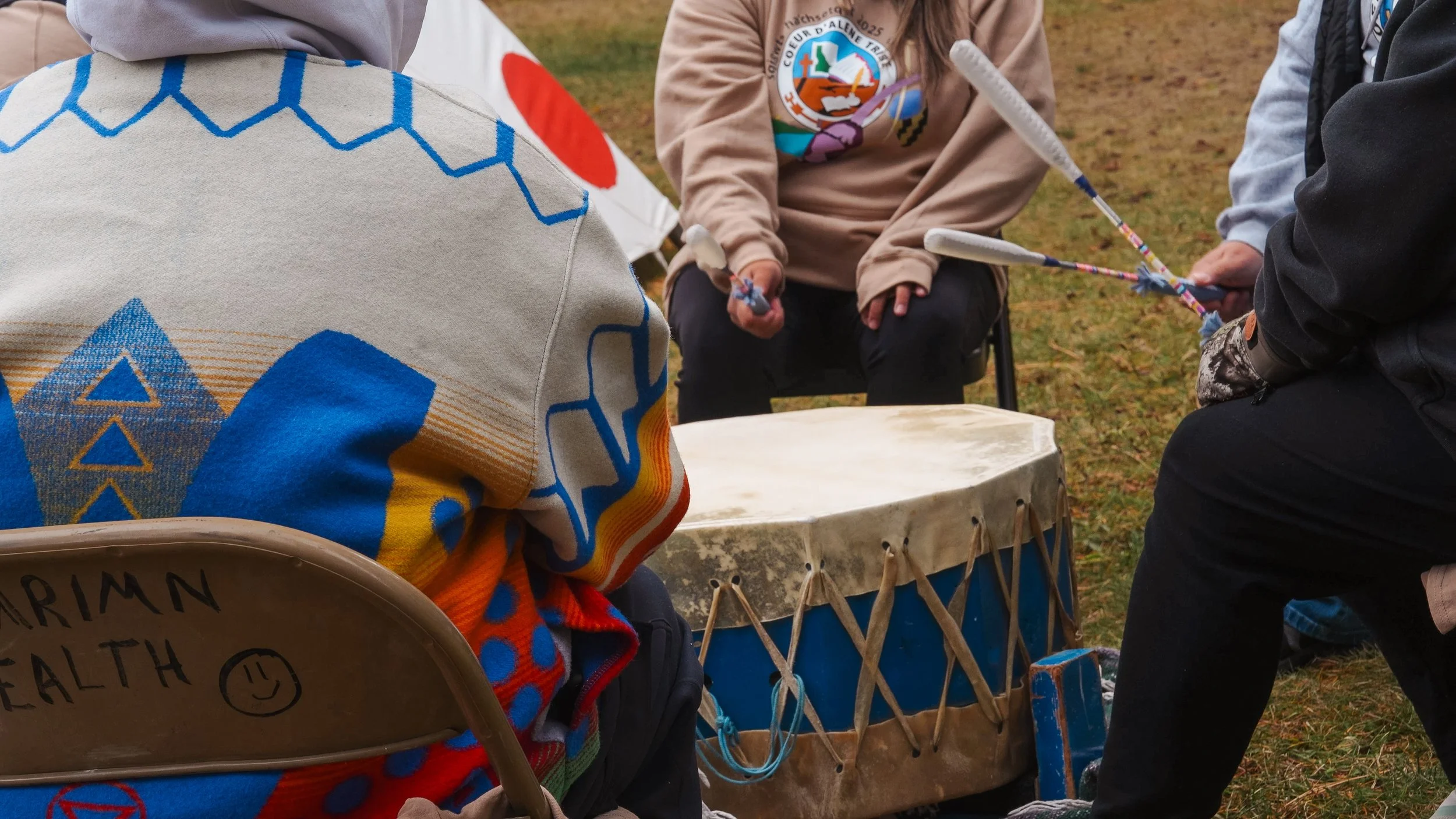
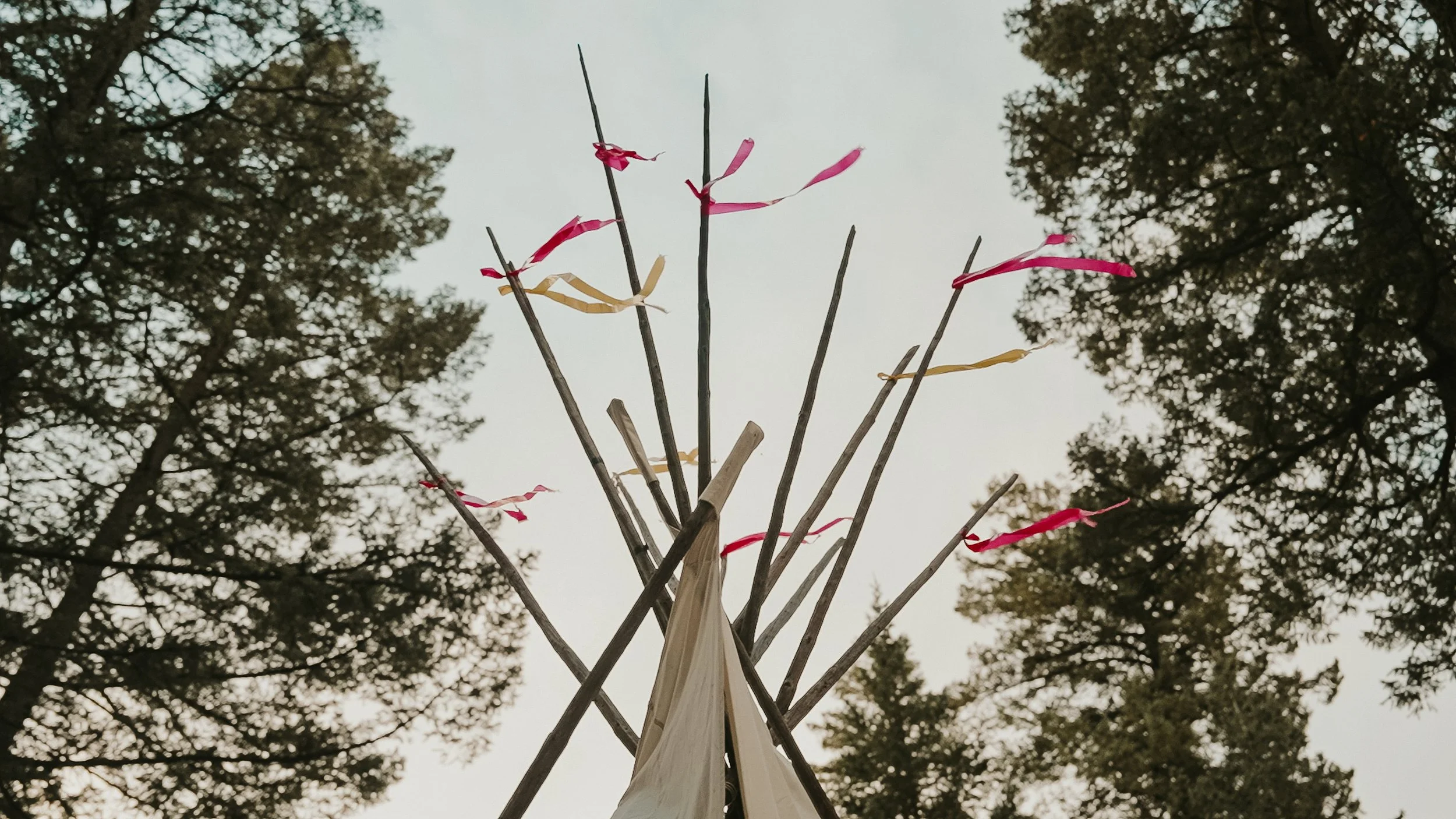
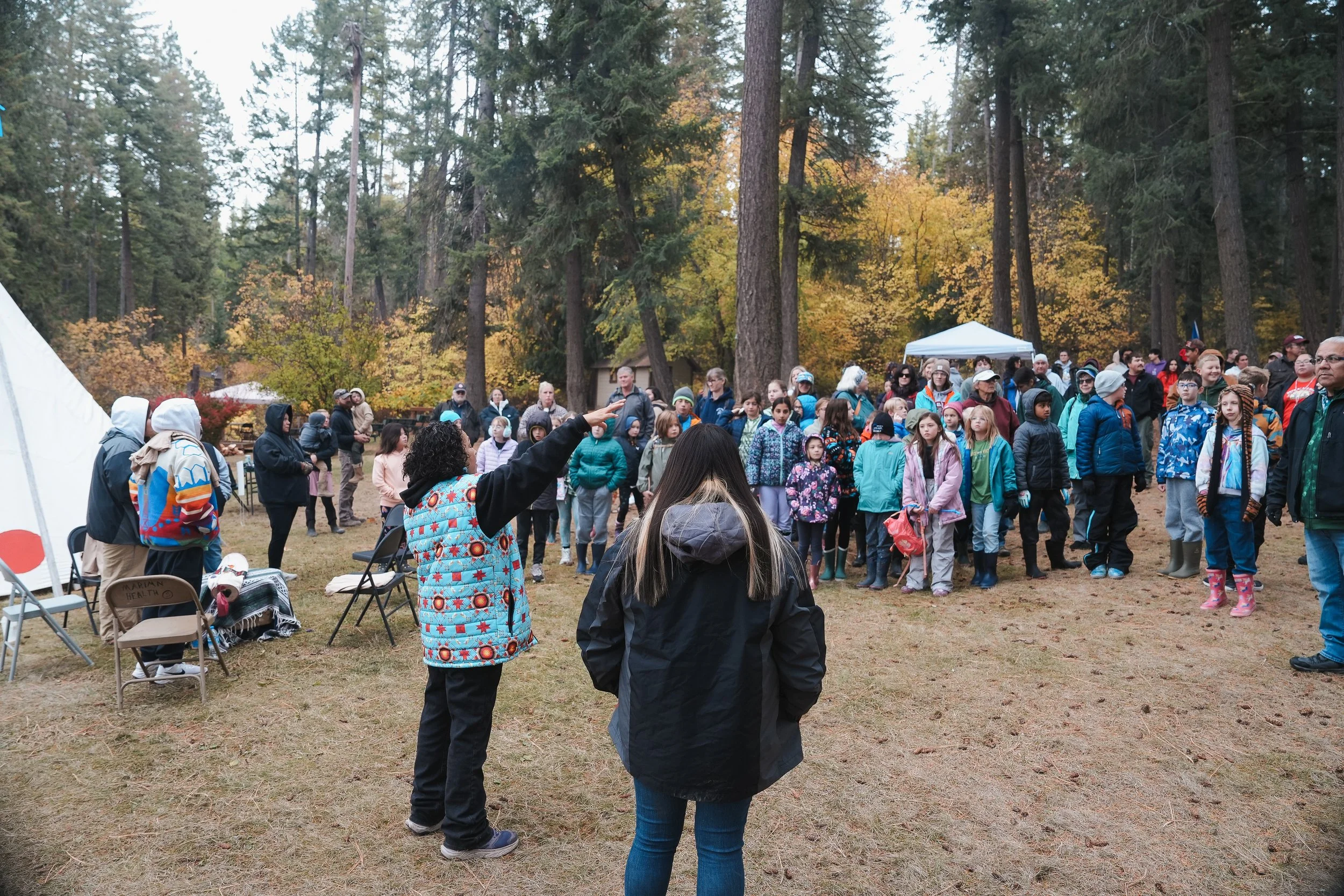
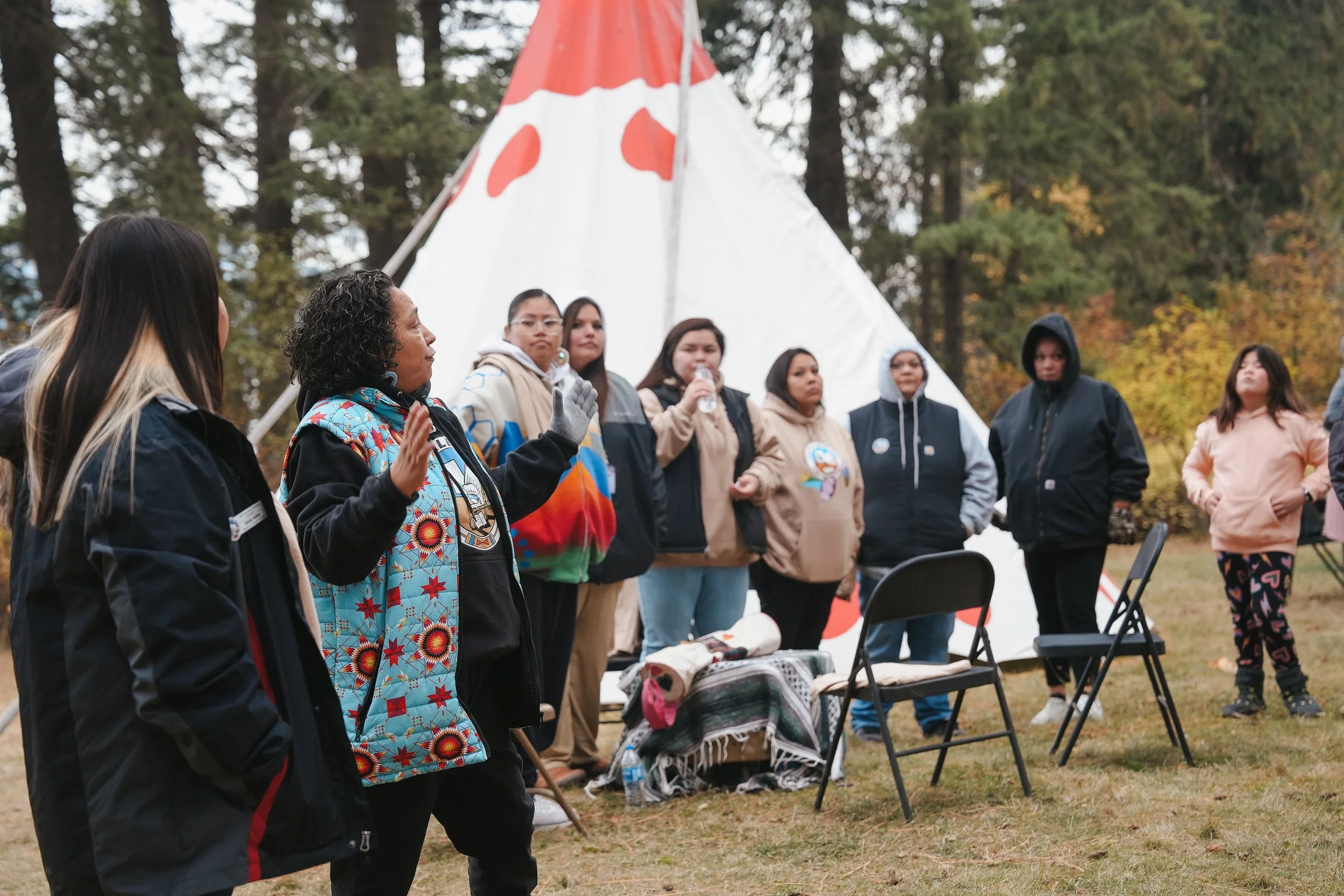
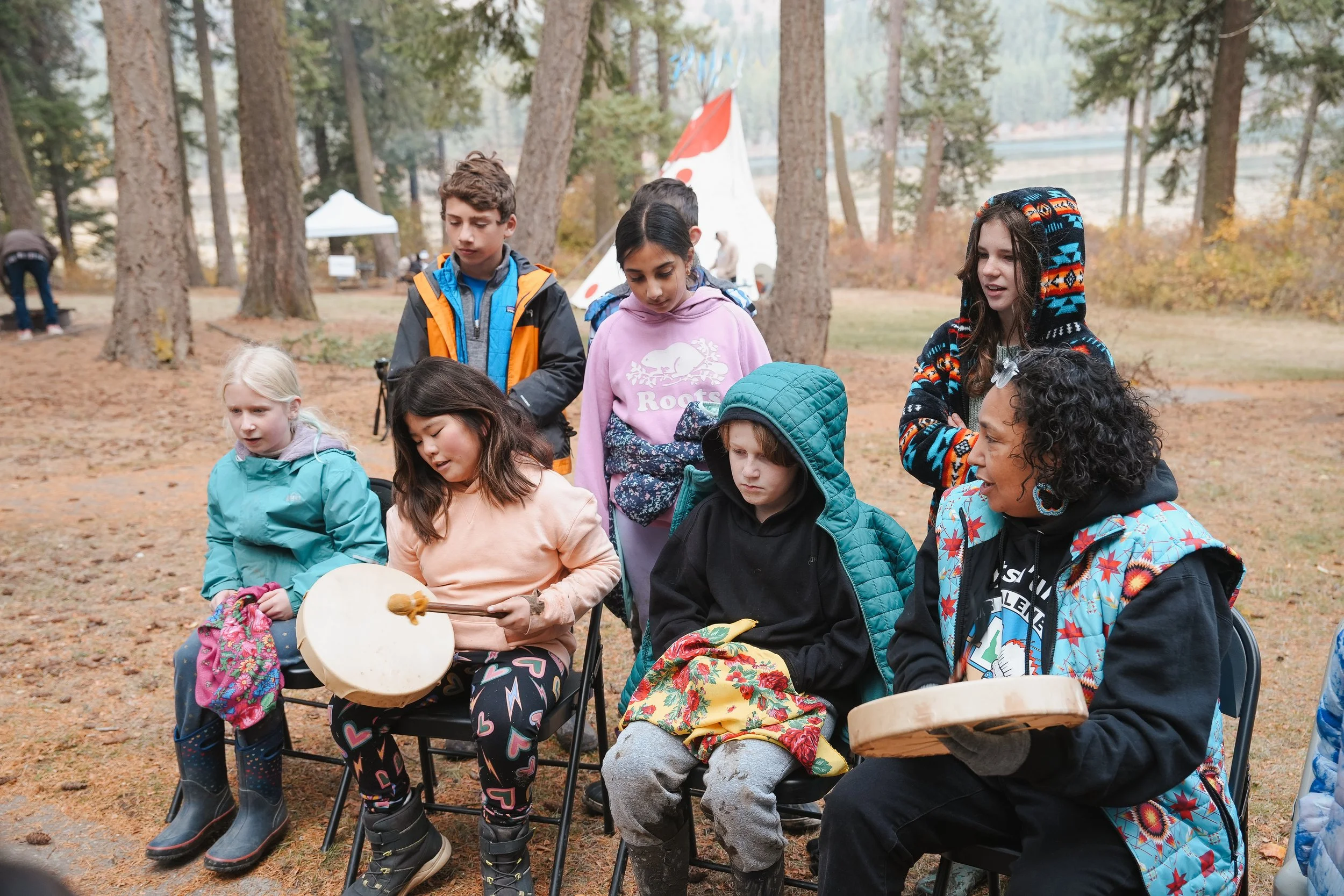
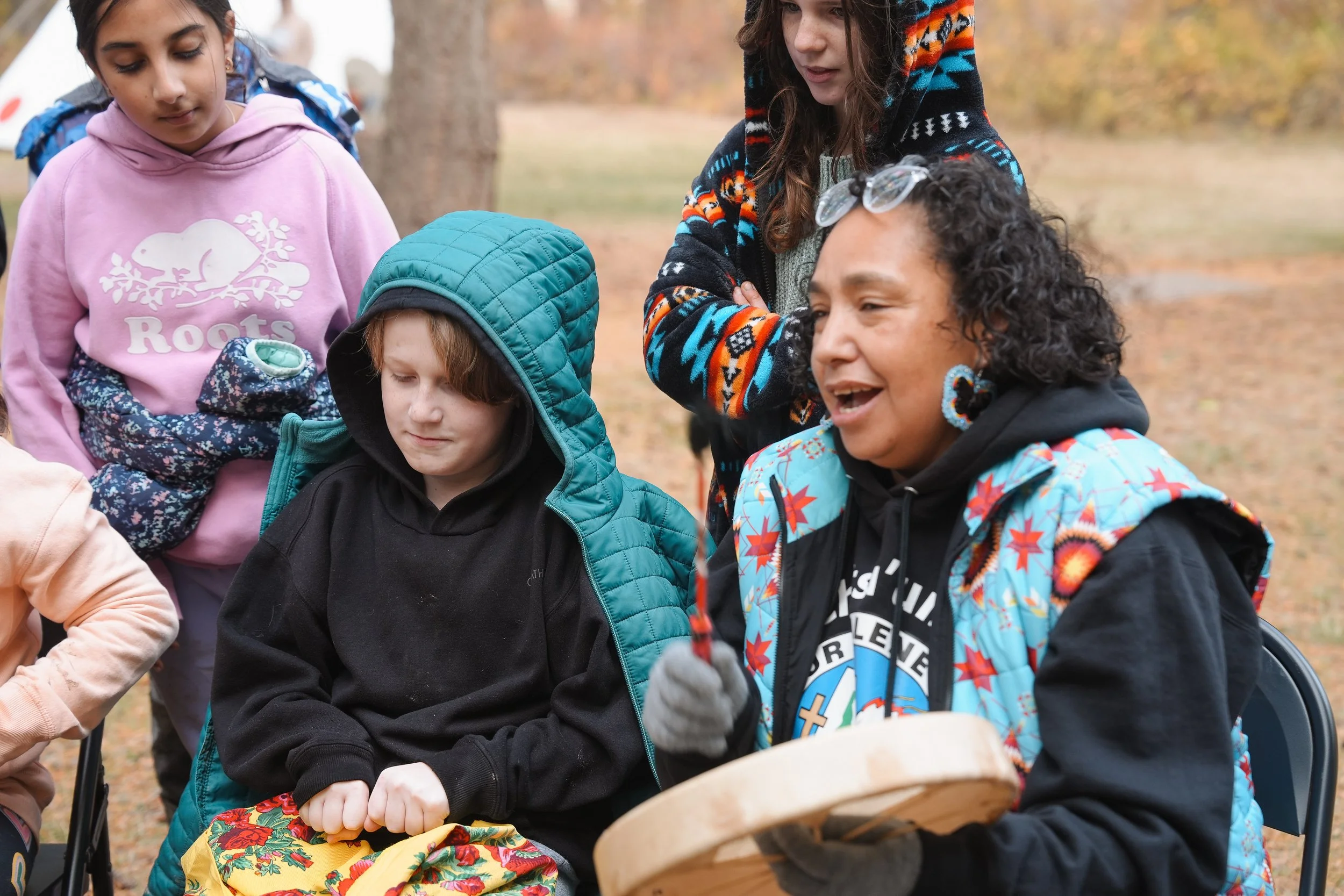
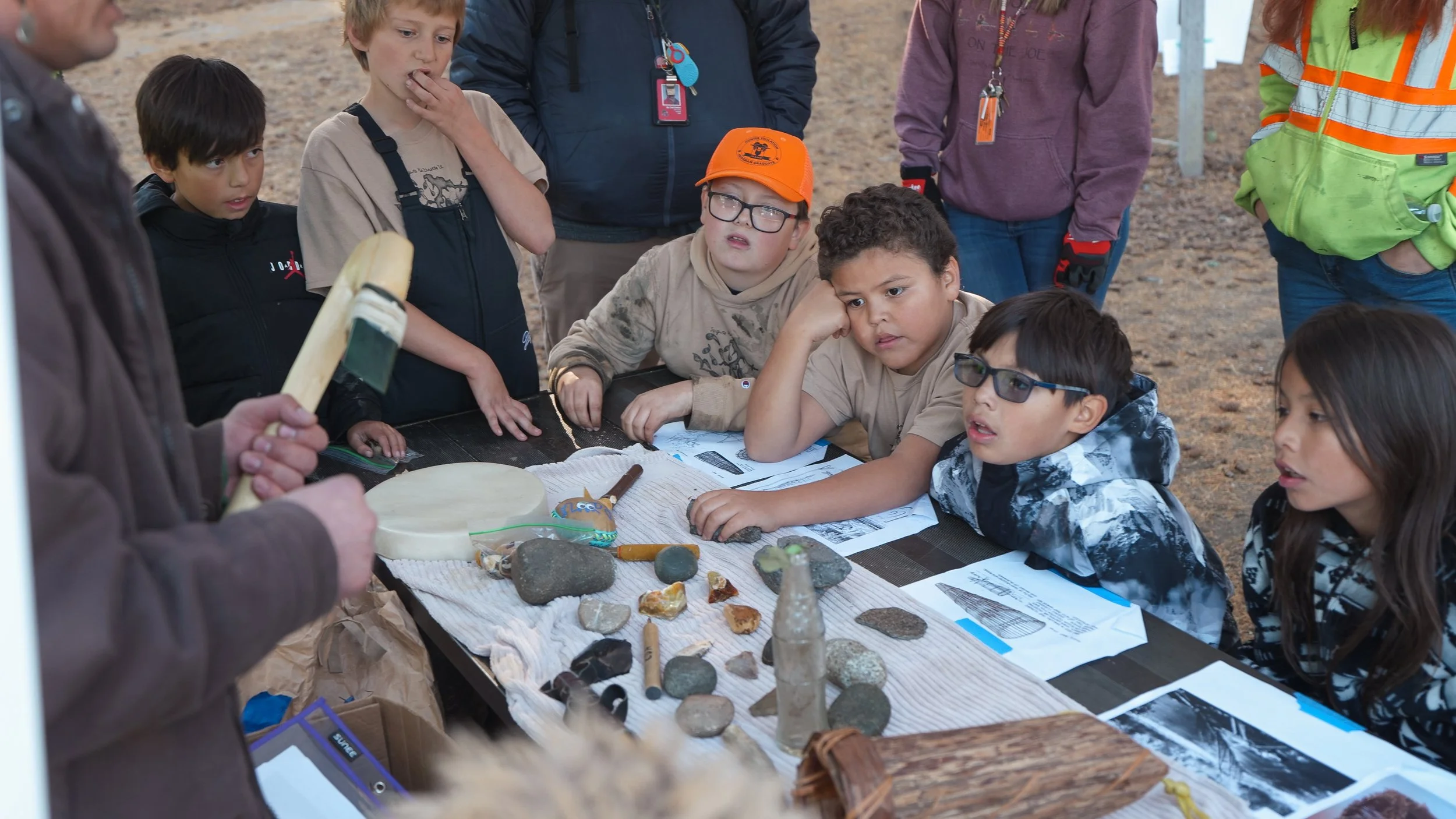
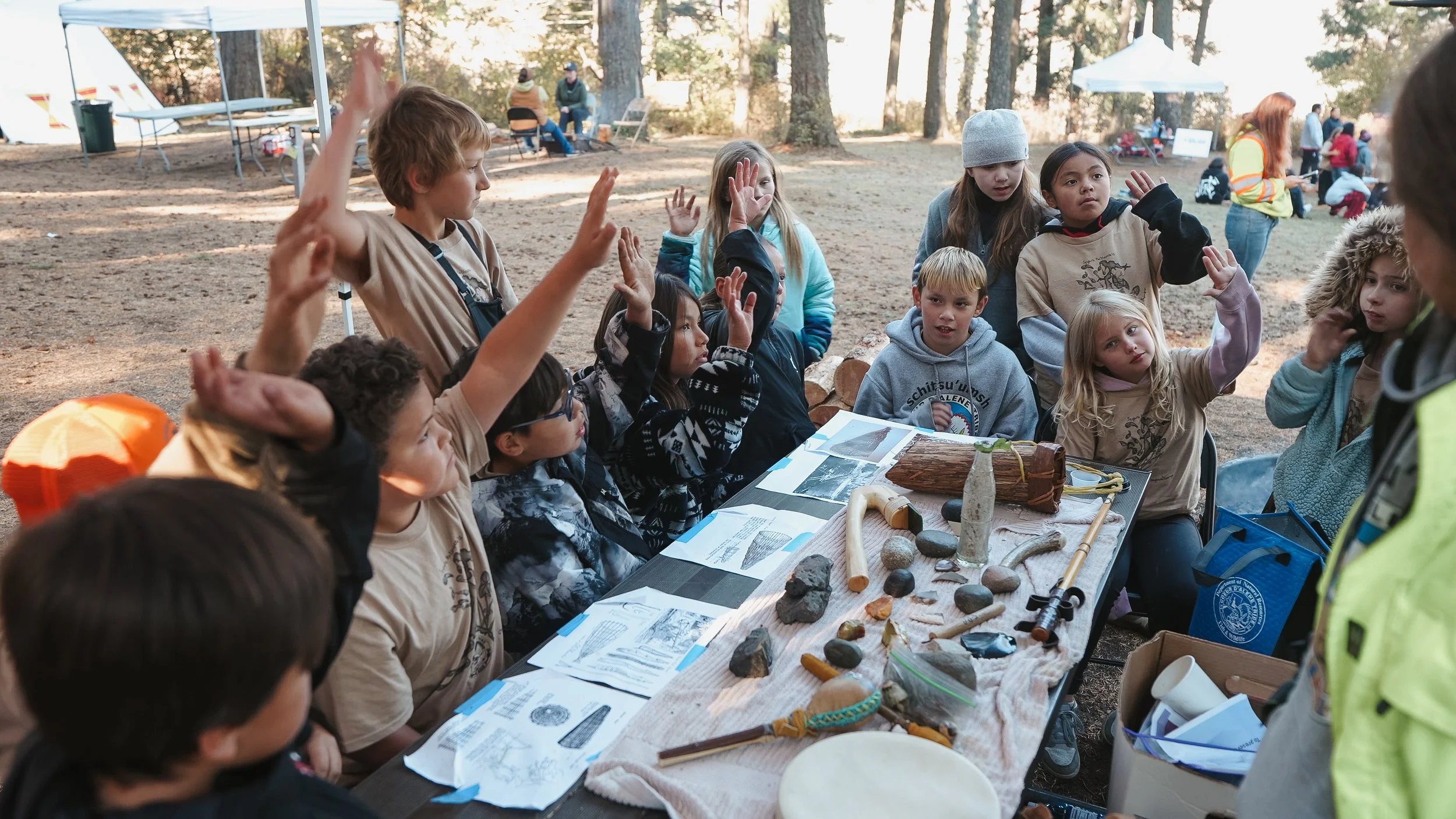
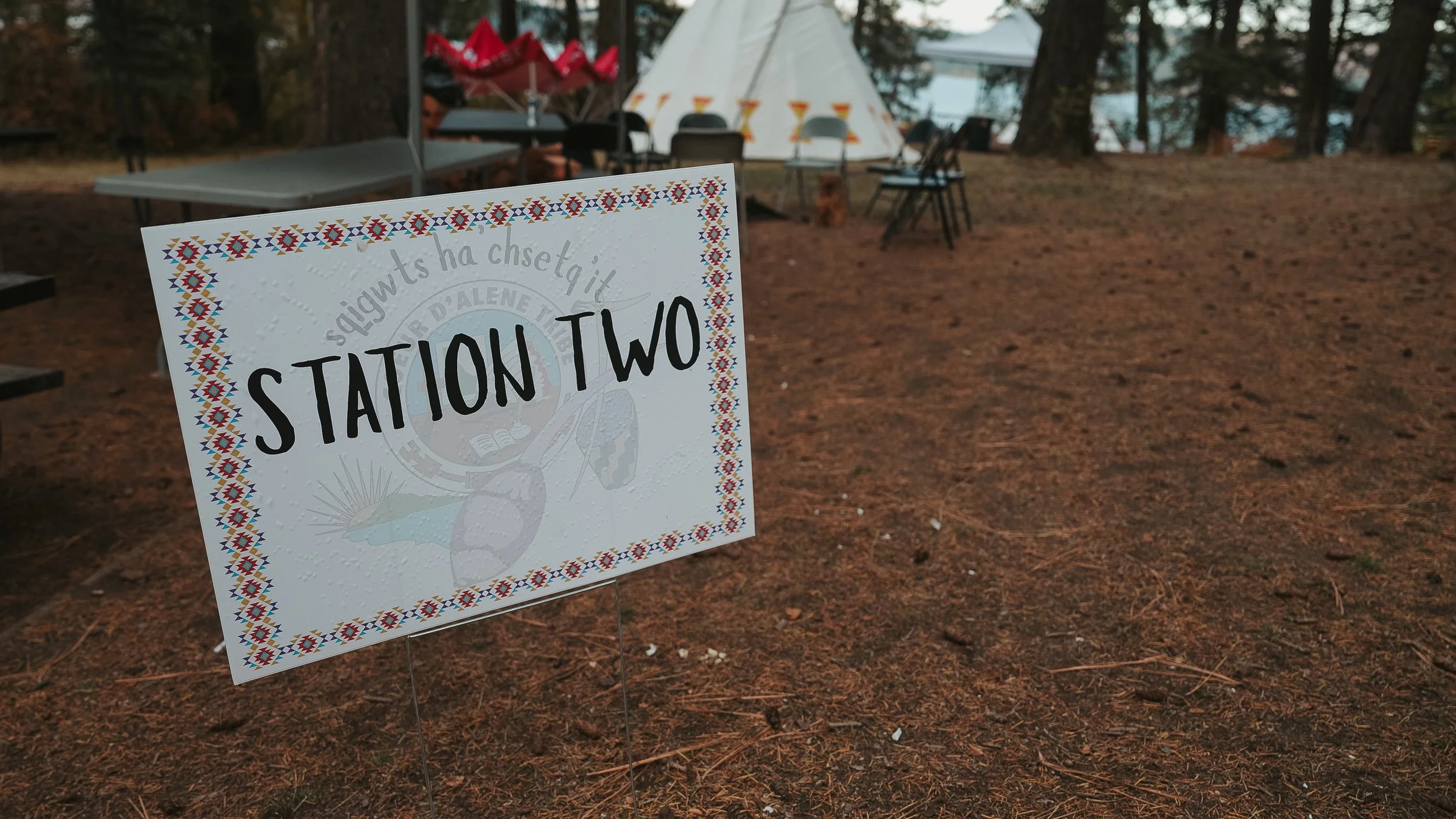
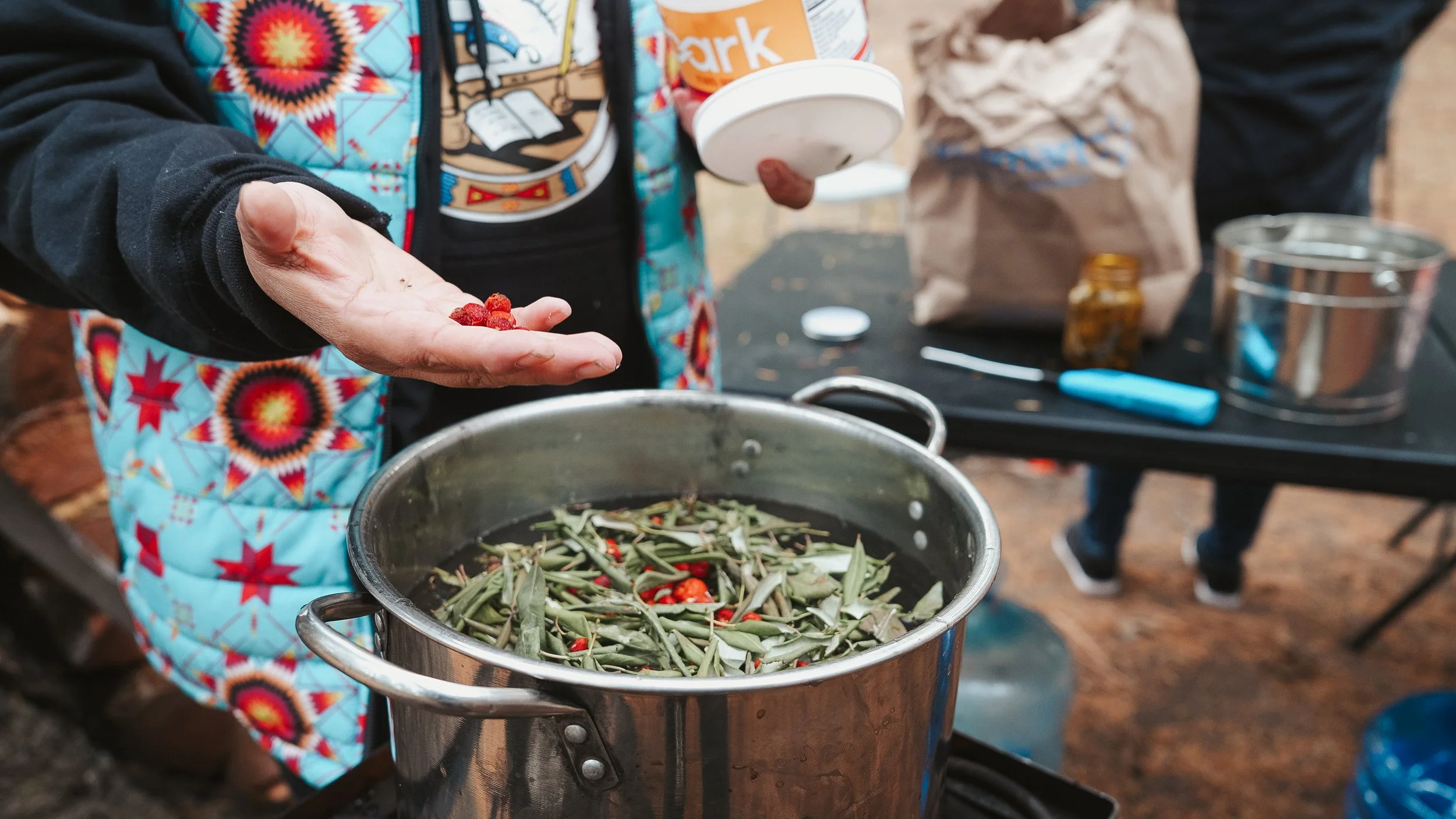
Water Potato Day is hands-on and intentionally educational. When you arrive, the park is set up with stations hosted by the Tribe’s Natural Resources Department and other community members — each one offering a different way to learn through doing. You’ll find lessons on Beaver dams and old tools alongside language, drumming, and storytelling in a teepee.
One of the most powerful sights is the Tribe’s cedar dugout canoe: Warch. Warch means frog in the language. Warch is the first cedar dugout canoe our community has had on the lake in more than 100 years. When it was being carved, frogs ended up gathering on it every couple of days, and that’s how it got its name. The absence of canoes on the lake — and their return — says a lot about what cultural disruption can look like. Cultural revitalization requires people really doing stuff.
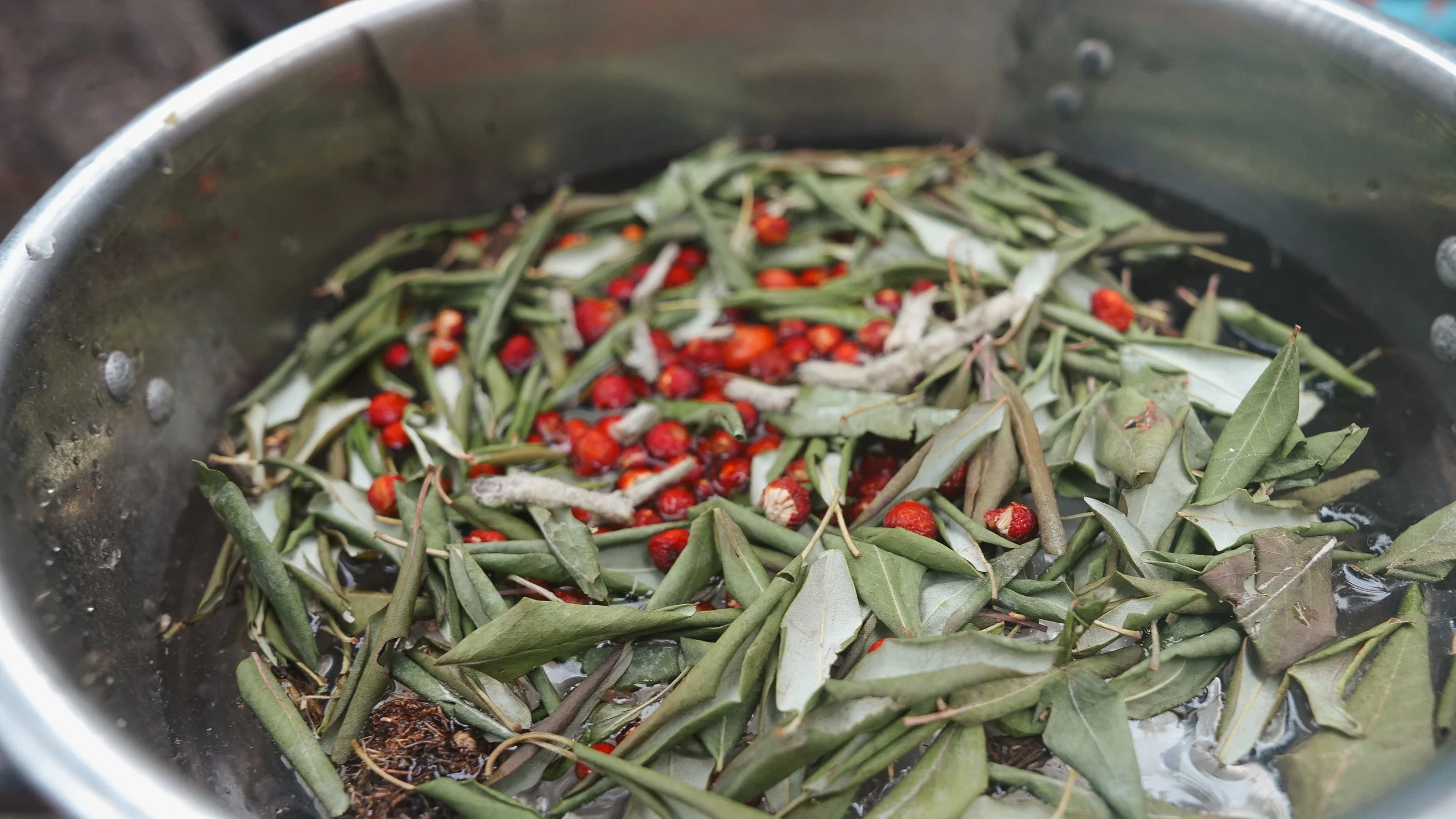
And of course, there’s the station everyone remembers: the food. Up on the hill, salmon and deer are prepared over the fire and little tastes are offered throughout the day, the kind that pull people together without needing an announcement other than, “looks like the salmon is done.” One moment I still smile about: a non-Native kid tried the salmon and yelled out, “This is the best salmon I’ve ever had!” It was sweet, but I also had no doubt that it was truly the best salmon he had ever had, Coeur d’Alene’s know a thing or two about cooking salmon. Water Potato Day isn’t only for Tribal members. It’s a bridge for the surrounding community to learn about their neighbors.
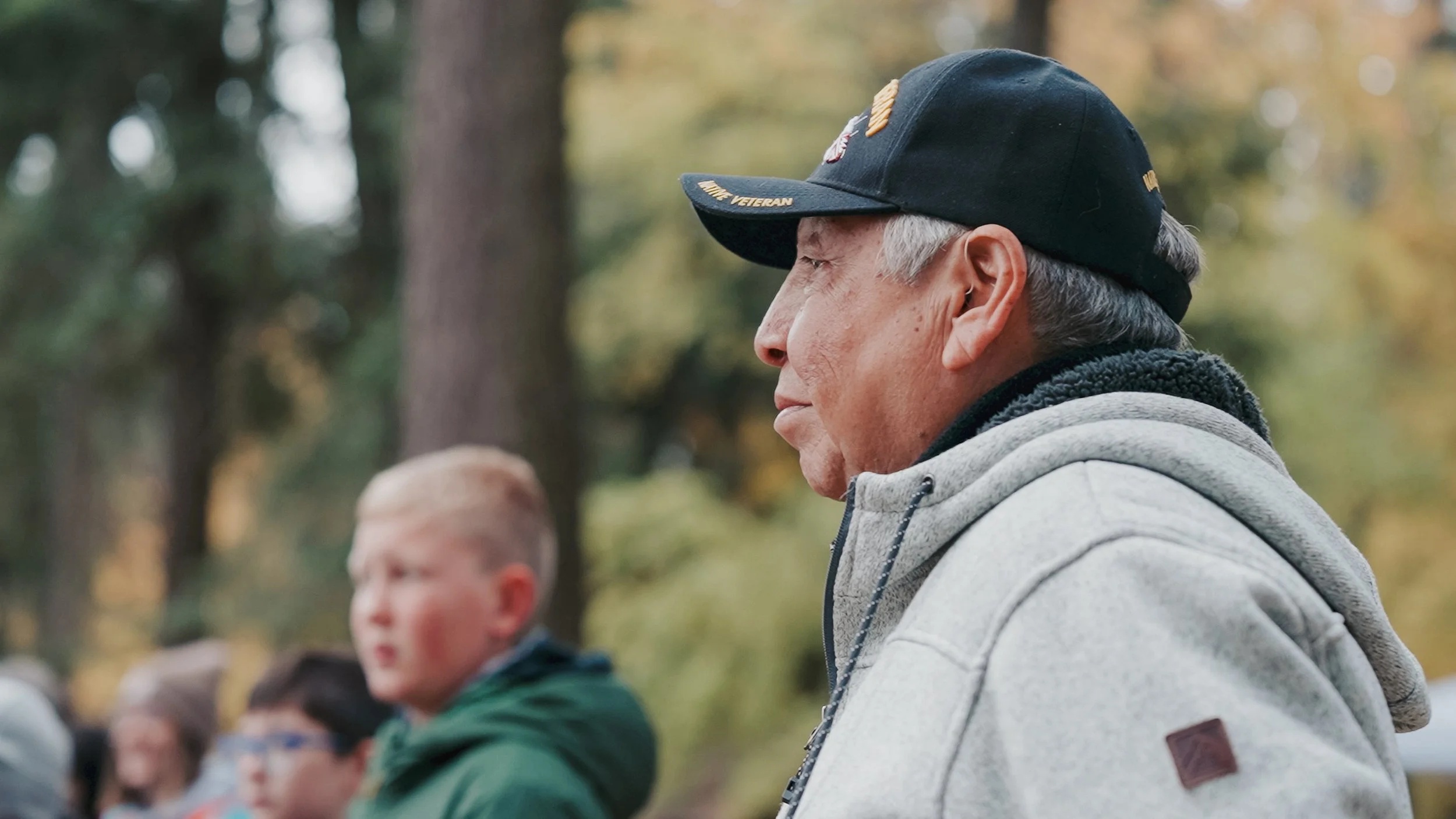
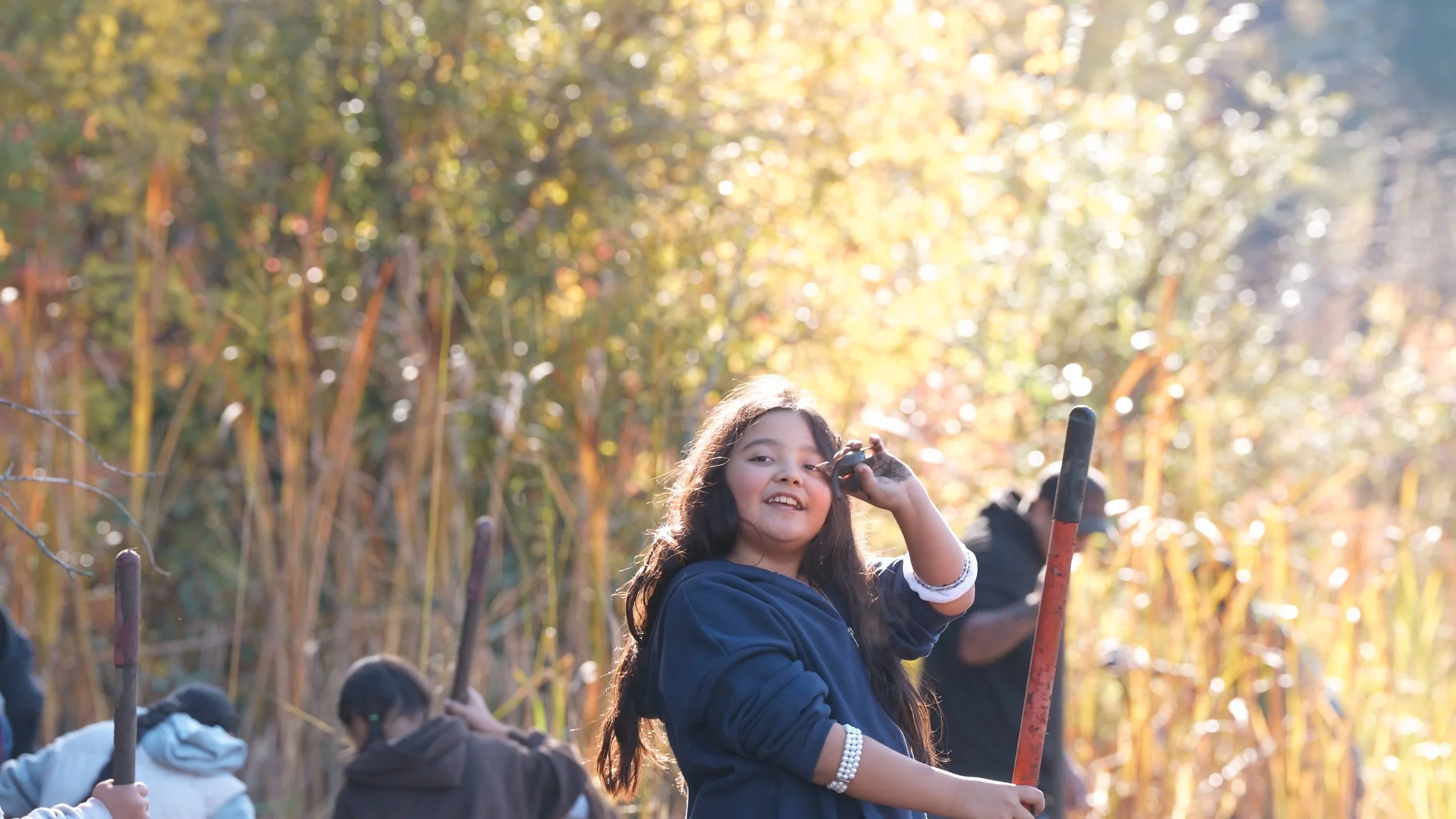
Local schools attend — kids from the reservation at the Tribal School in DeSmet and Lakeside in Plummer stop by as well as other nearby and off-reservation schools including places like Harrison and Spokane. The energy is joyful. Kids are always running around. They learn in motion. They laugh a lot more than they would in a classroom. And adults get a lot out of it too — because learning doesn’t end after grade school, and belonging isn’t something you age out of.
Water Potato Day
at Coeur D’Alene Lake
Water Potato Day at Lake Coeur d’Alene: Harvest, Story, and Sovereignty
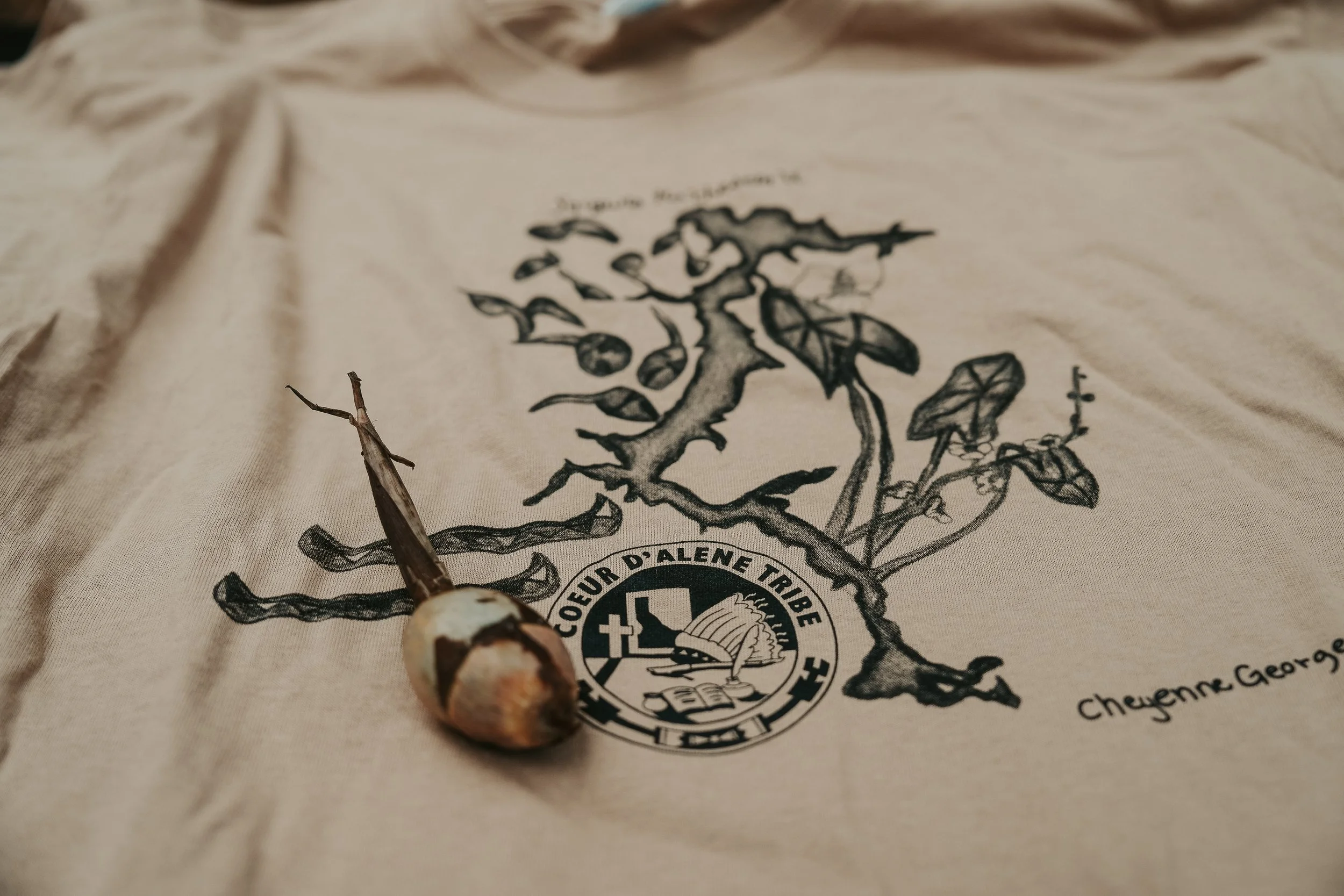
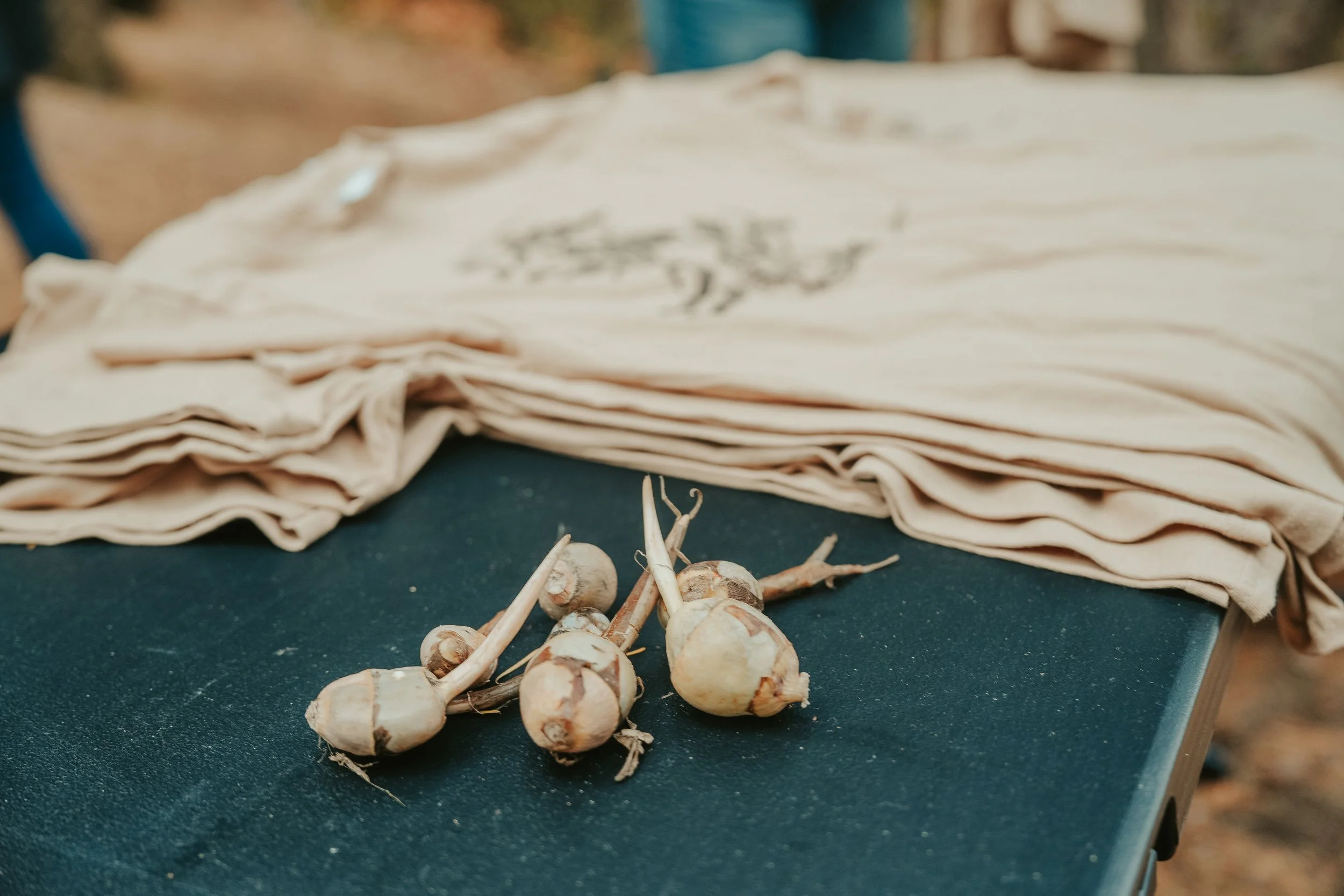
Each fall, the Coeur d’Alene Tribe returns to Lake Coeur d’Alene for a celebration that looks simple on the surface: we gather, we learn, we laugh, and we harvest water potatoes from the mud along the shoreline. But Water Potato Day is more than a community event — it’s a living expression of relationship to place, and a reminder that culture doesn’t survive in theory. It survives in real life.
What’s important to know is that a formal Water Potato Day celebration is also relatively new over the long history of the tribe. When I was growing up, we didn’t have this celebration, but now its a staple in the Coeur d’Alene calendar. The reason is not because the connection wasn’t there, but because access to that connection was disrupted. for over 100 years.
What it feels like to be there
The harvest that marks a season
In the Coeur d’Alene way of understanding time, the year isn’t divided into four seasons in the Western sense. Our seasonal calendar is tied to what the land provides and what responsibilities come with that. Water potato harvest marks the closing of the gathering year — the last major harvest before winter settles in.
It’s not just about food. It’s about rhythm. Water potatoes symbolize that turning point: the end of the social season and the beginning of rest — when it’s time to turn inward, slow down, and prepare for the winter months.
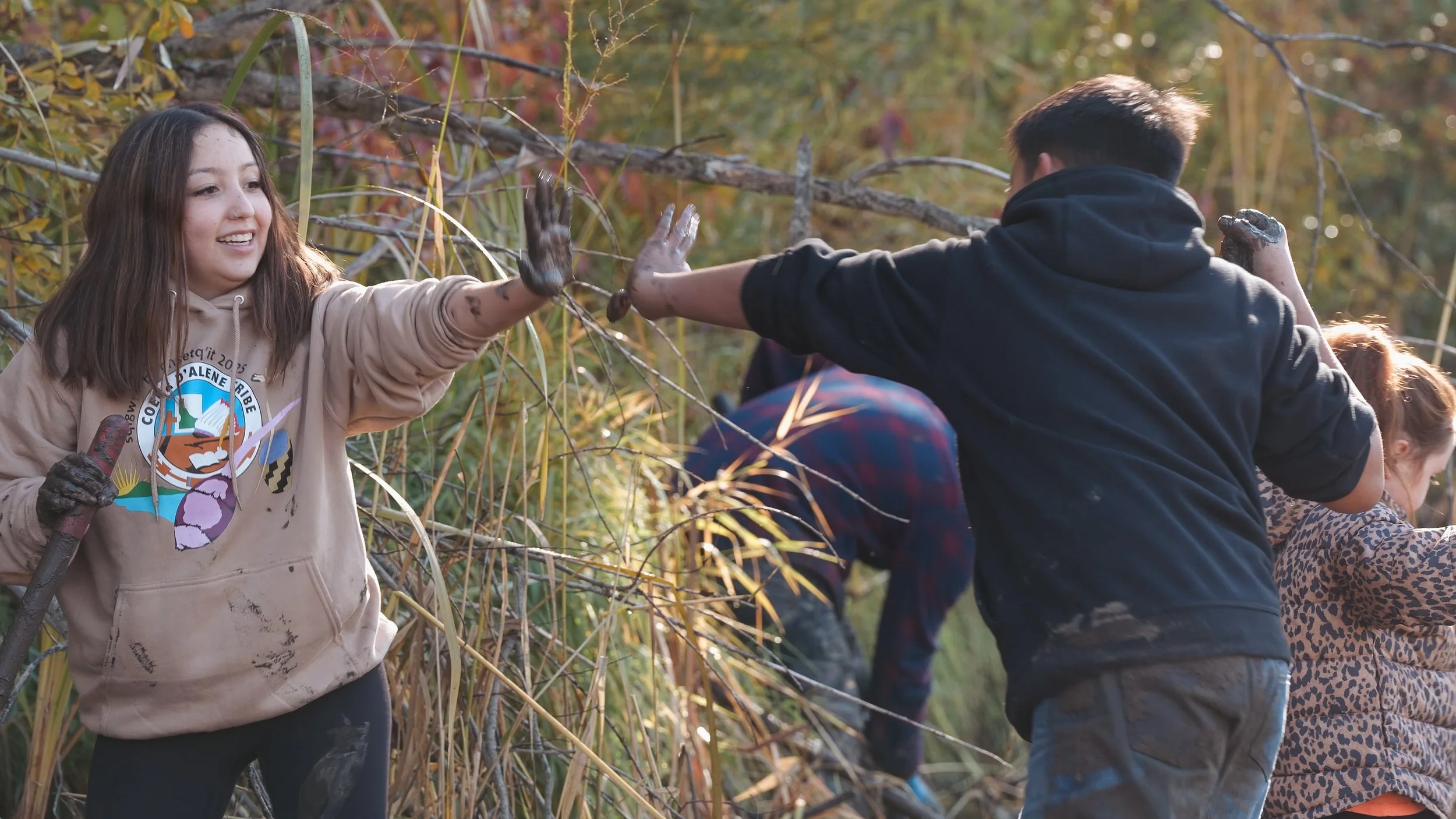
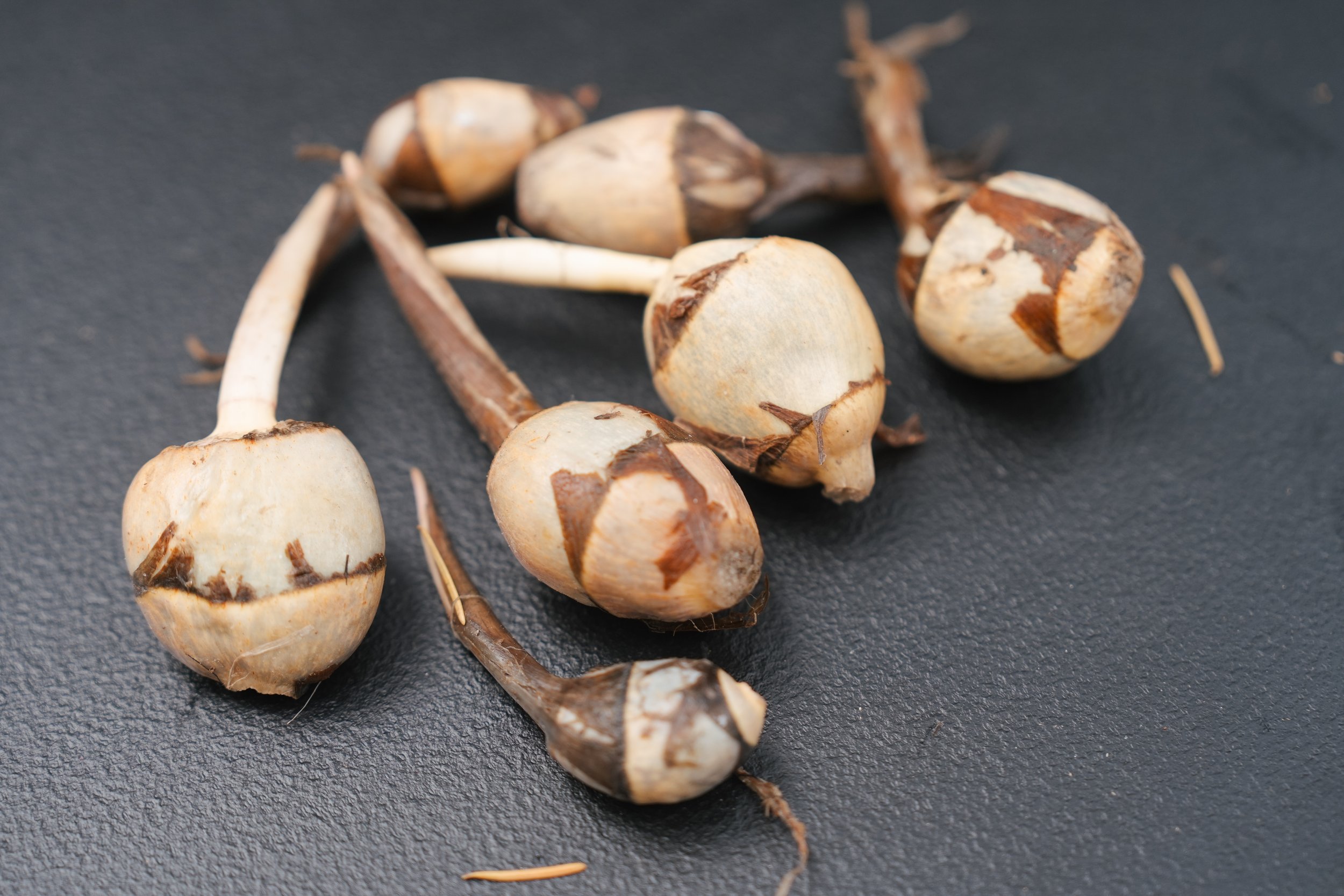
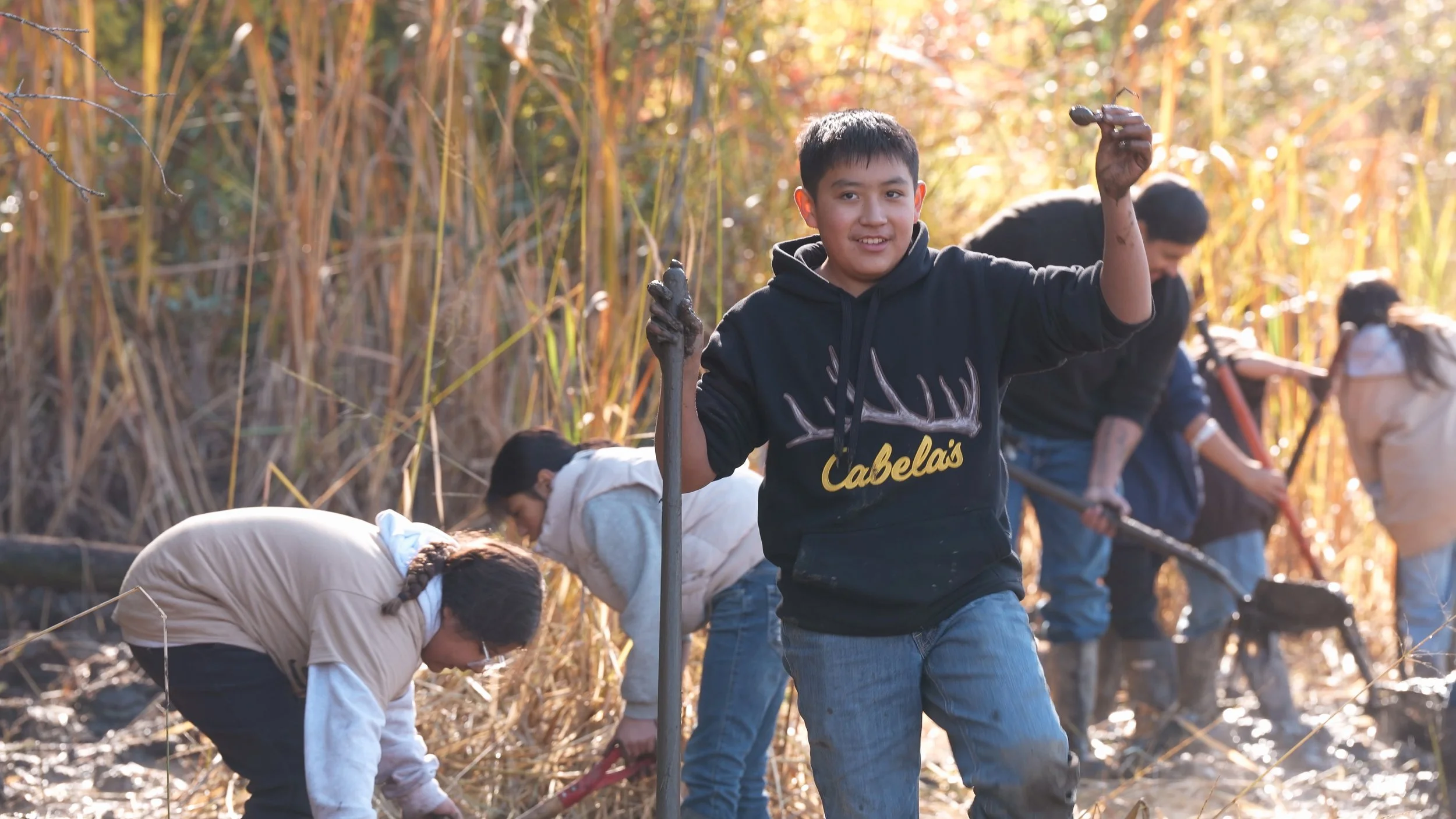
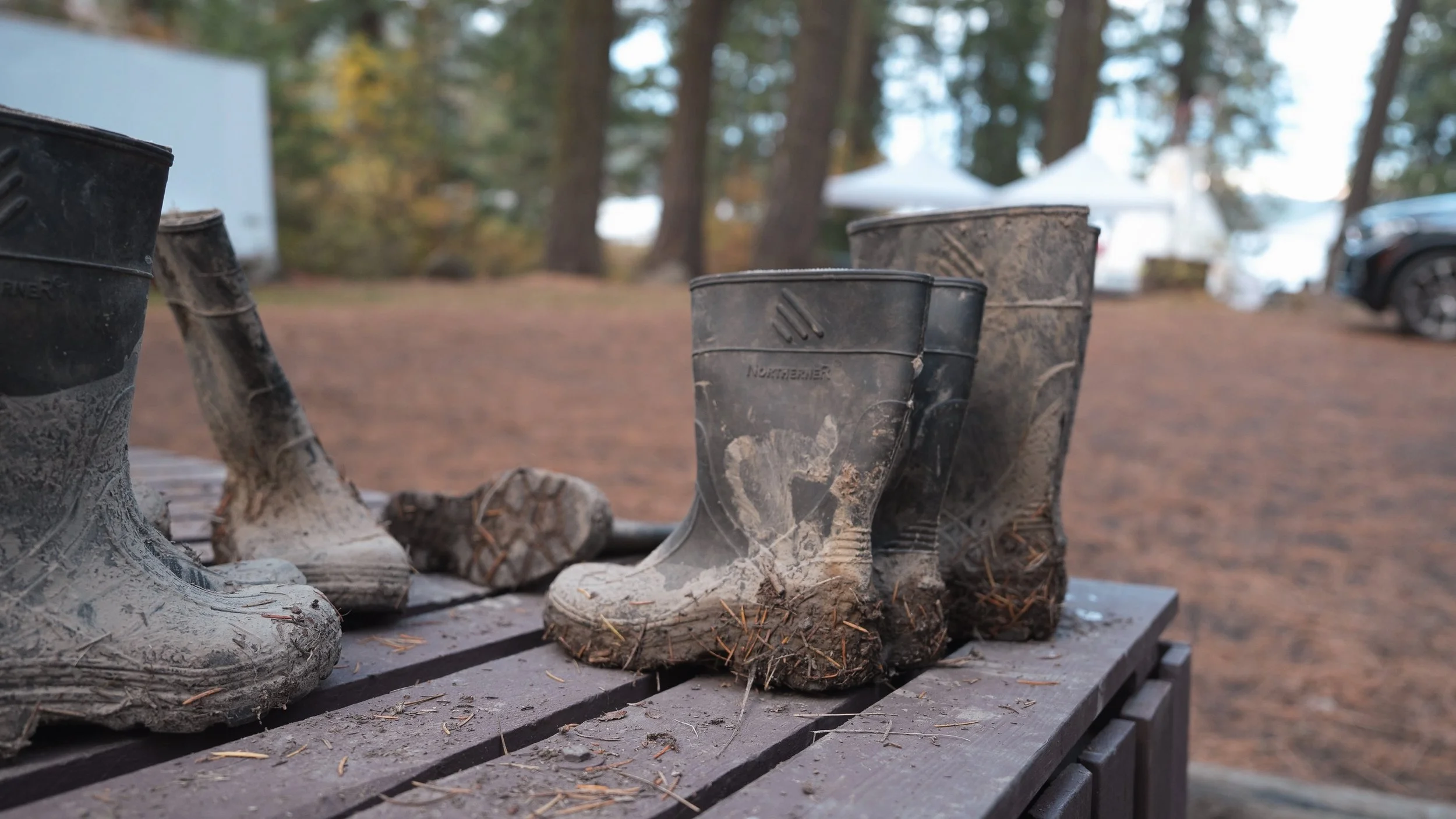
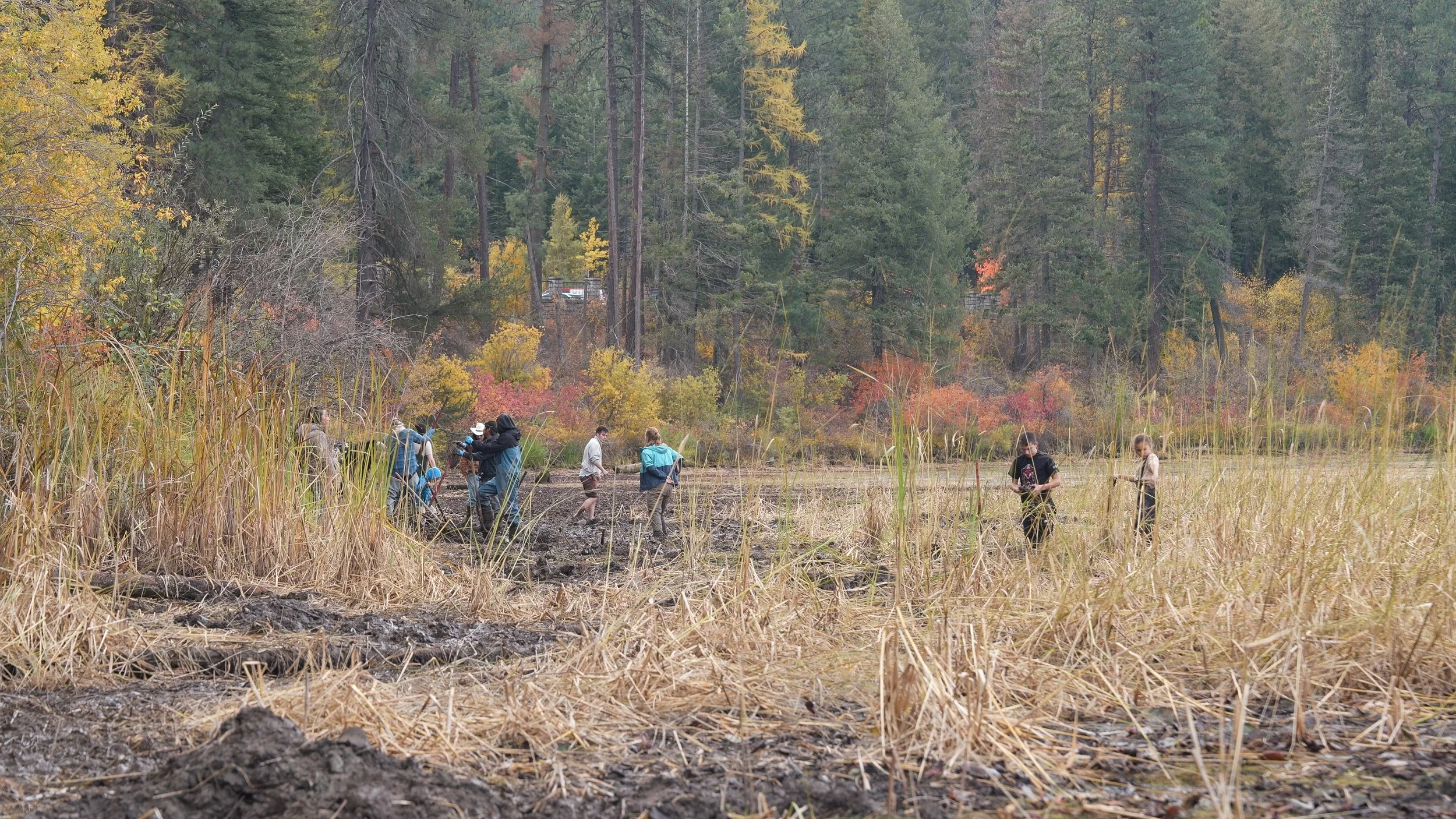
And the actual harvesting is exactly as messy as it sounds. You look for a leaf with a pointed shape, and that’s where you dig. It’s labor-intensive, muddy, and genuinely fun. I’ve seen teenagers step in wearing beautiful ribbon skirts for “cute photos,” only to come out laughing because the mud had other plans for them. That’s part of the point: Coeur d’Alene culture is not a performance, It’s about participation. And no matter who you are, that cold October mud can humble you really quick.
“The Creator made the lake…”
Whenever I’m at Lake Coeur d’Alene, I think of my great-uncle, Henry SiJohn — who served on Tribal Council during the lake case era and was the director of Natural Resources in the 90’s. He was a steady advocate for the lake and for the responsibilities our people hold. One of his teachings has stayed with me because it’s simple and unshakeable:
“The Creator made the lake, and He made the Coeur d’Alene to protect the lake.”
That teaching is not abstract. It shows up in events like Water Potato Day — because stewardship isn’t only policy or science. It’s about togetherness and being in a place that is special.
Inviting our neighbors
One of the easiest misunderstandings about Tribal events is to assume they are only internal — only for Tribal members. Water Potato Day is intentionally broader than that.
When students from neighboring towns come to the lake, they’re not just going on a field trip. They’re gaining a lived memory of the Tribe as present-tense neighbors and leaders. Those kids will grow up to become teachers, city officials, business owners, county commissioners, and voters. Experiences like this shape how the region understands the Tribe — long before they ever sit in a meeting where Tribal sovereignty is being debated.
This is also consistent with the Coeur d’Alene Tribe’s long-standing investment in the region: not only caring for the reservation community, but supporting broader education and opportunity across North Idaho. That’s part of the Coeur d’Alene worldview — stewardship includes people, not just land and water.
Documenting the day
This year, I partnered with the Tribe’s Natural Resources Department to document Water Potato Day through photo and video. My role included:
On-site photography and interviews
Drone footage that captured both the lake and the human story within it
A few short video pieces designed for education and outreach
My goal wasn’t simply to “cover an event.” It was to honor a practice that has always existed beyond cameras — one rooted in belonging and relationship to place — and to make sure the visuals reflected that.
Of course, in my heart, I was documenting my community. But I am also a technical camera nerd, and I loved pulling the levers of photography, cinematography, and filmmaking to highlight this event artfully and truthfully.
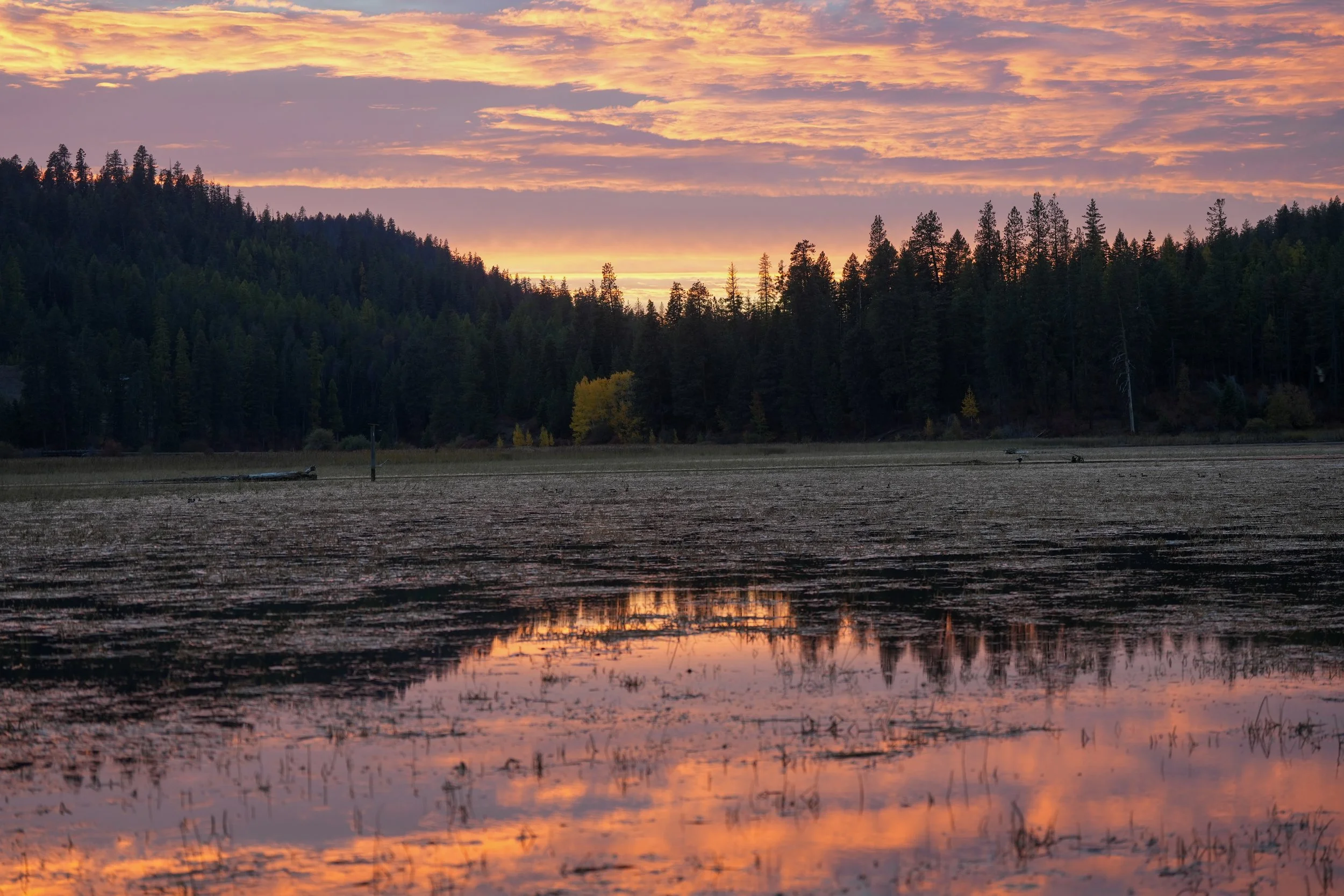
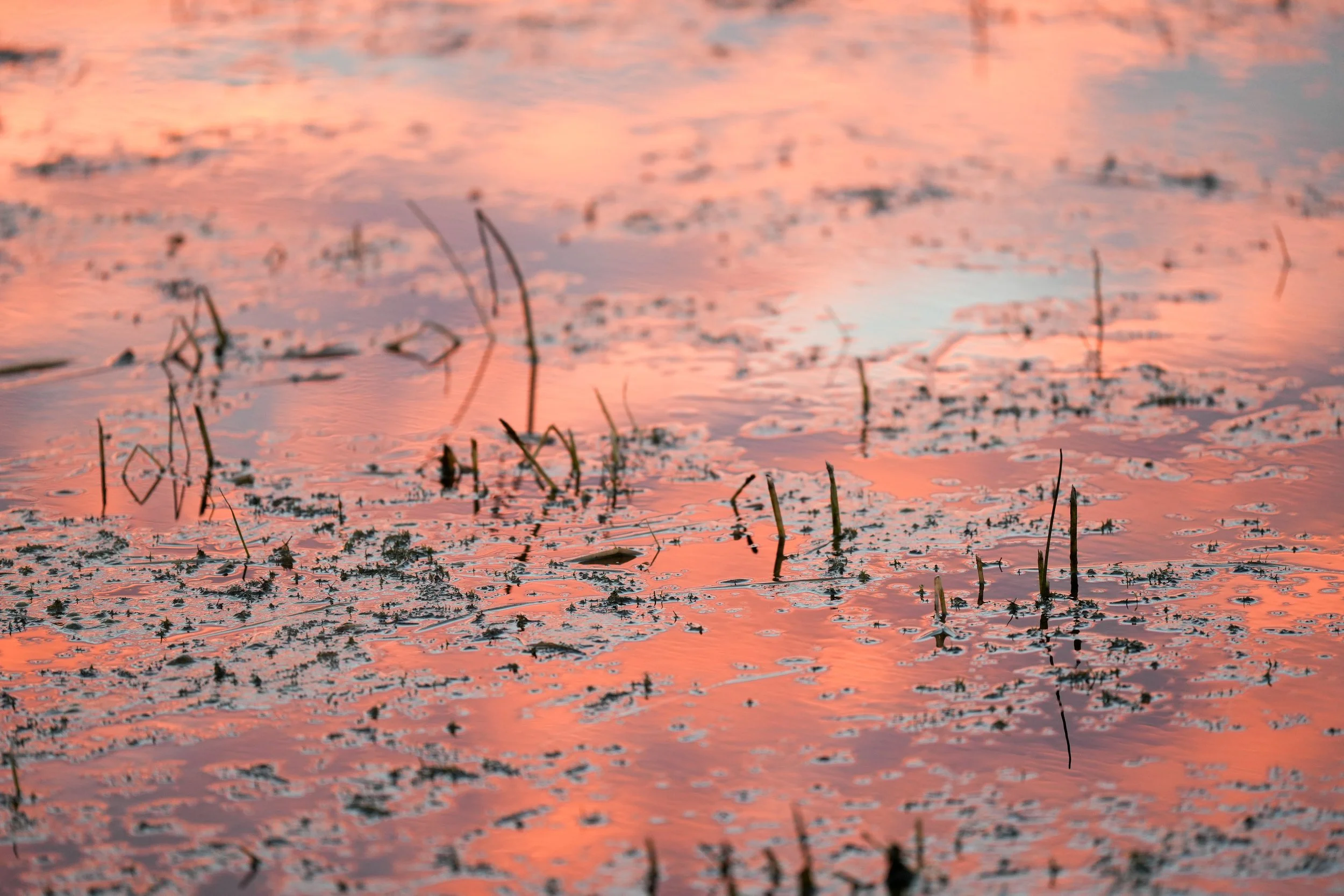
On a technical level, I shot many scenes down on the water with a telephoto lens because the compression of the lens brings the landscape close to our subjects — it pulls the environment into the human story, the golden larch, the marsh, and the shoreline. This is so far from how our eyes see that it pops when you see an image like this. I also loved capturing moments like an impromptu stick game at the end of the day with slow motion. The hits on the drums, quick reactions, and big laughter are captured on a minute level with slo-mo. On the audio side, I could tell the kids were really enjoying themselves because I spent a surprising amount of time adjusting audio levels. The kids’ excitement kept blowing out the mic.
When I left, my cheeks hurt from smiling, and my voice was hoarse from talking. My hair smelled like smoke from the fire, I had mud under my nails, and my arms were sore from carrying my camera all over. That’s how I knew it was a good day.

The Land is Smiling
In this 3 minute video, we explore the cultural and spiritual importance of gathering for Water Potatoes.
The Land Remembers
In this social media reel, Tribal Council Member Heme James relates the importance of being out on the land.
What I hope these videos become
I hope the final media does two things:
Acts as a documentary record — a “primary source” snapshot of who the Coeur d’Alene Tribe is right now, today, in 2025.
Supports the Tribe’s ongoing stewardship story — not only as caretakers of land and water, but as community builders in the broader region.
The deliverables will support the Natural Resources Department’s education work, outreach, and future grant efforts. But beyond that, I hope they offer an honest portrayal of what Water Potato Day really is: reconnection made visible.