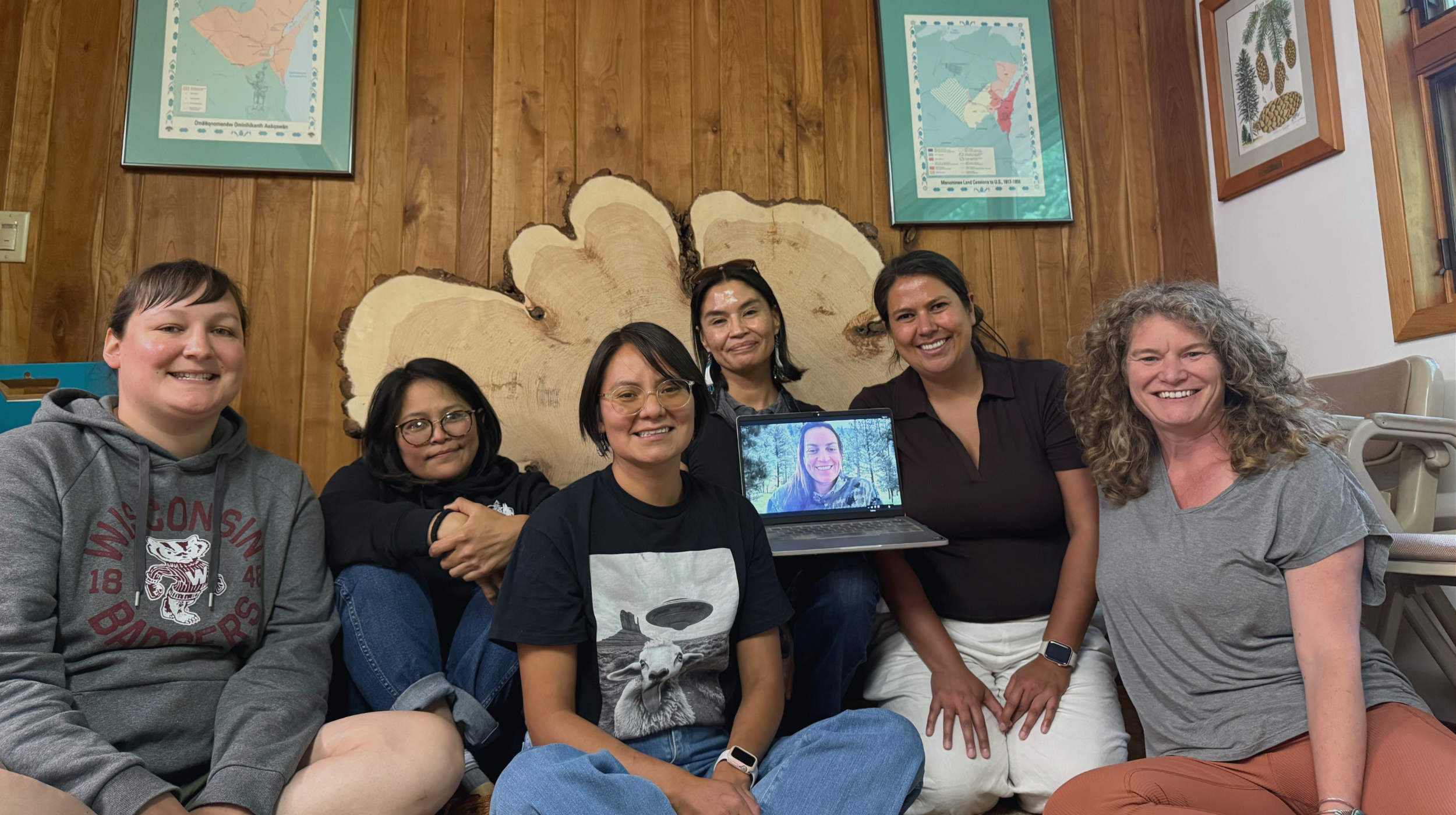
In June 2026, I traveled to Menominee, Wisconsin, to facilitate a governance and strategic planning session for Canopy & Ember, a collective of Native women committed to creating space, support, and opportunity for fellow Indigenous women working in forestry, fire, and natural resource management.
The gathering brought members together at the Menominee Forestry Department ahead of the Intertribal Timber Council’s annual meeting. Canopy & Ember already had many of the ingredients organizations need to make an impact: a clear mission, deep professional expertise, strong relationships, and members who genuinely care about one another and the work.
The challenge was translating Canopy & Ember’s shared commitment into sustainable action through a clearer organizational structure. As facilitator, my goal was to help them establish greater clarity and accountability while preserving the flexibility and shared leadership at the heart of their work. Together, we set out to build a practical framework for making decisions, distributing responsibility, and moving Canopy & Ember’s vision forward.
FACILITATING SUSTAINABLE GROWTH
FOR INDIGENOUS WOMEN IN FORESTRY
My role was to design and guide a full-day conversation about the organization’s future. We began by identifying everyone's strengths, interests, and realistic capacity. From there, we explored organizational models, governance approaches, decision-making authority, and the responsibilities that needed clear ownership.
One central tension was familiar to many values-driven organizations: How do you create accountability without building unnecessary hierarchy?
Canopy & Ember wanted to preserve their collaborative spirit while reducing circular conversations, clarifying decisions, and ensuring responsibilities didn't keep falling to the same few people.
The group ultimately created a twelve-month roadmap focused on strengthening internal systems and pursuing fiscal sponsorship to expand opportunities for Indigenous women in the Natural Resources field.
FACILITATING SUSTAINABLE GROWTH

FOR INDIGENOUS WOMEN IN FORESTRY
BUILDING STRUCTURE AROUND COLLECTIVE VALUES
What stood out to me throughout the session was that Canopy & Ember did not need more ideas. The ideas, relationships, and expertise were already there. The real opportunity was to create enough clarity and structure for those strengths to work together.
That is one of the things I value most about facilitation: helping a group recognize what it already holds, naming what is getting in the way, and building a practical path forward.
This is also where an outside facilitator can be especially useful. When you are deeply invested in the work, it can be difficult to step outside the day-to-day details and see what is missing between a strong vision and actually putting it into practice. I’m good at listening across complex conversations, identifying the patterns and sticking points underneath them, and helping a group turn insights into clear decisions, responsibilities, and next steps.
My role is not to come in with the answers. It is to create the conditions for a group’s own expertise to become actionable. I bring enough structure to keep the conversation moving, ask the questions that help clarify what needs to happen next, and translate a room full of ideas into a framework people can realistically carry forward.
Nicole Stiffarm, a member of Canopy & Ember, described my approach this way:
TURNING STRENGTHS INTO ACTION
“Maria is an exceptional listener with a rare ability to create spaces that are thoughtfully tailored to the unique dynamics, needs, and goals of the group she is working with. Her facilitation fostered meaningful dialogue, encouraged participation from everyone in the room, and elevated the quality of our conversations and our collective ambition for what we could accomplish together.”
“Maria brought not only exceptional facilitation skills, but also knowledge, patience, grounding, and a true sense of sisterhood to every session. She created a space where we could think strategically while remaining connected to our purpose, our communities, and one another. Her guidance helped us move through complex conversations with clarity and confidence.”
Canopy & Ember left the session with clearer roles, a governance framework, defined priorities, and a roadmap for the year ahead.
More importantly, its members left with a structure built around how they want to work: collectively, flexibly, and with shared responsibility for supporting the next generation of Indigenous women in forestry, fire, and natural resources.
As the Canopy & Ember team shared afterward:
A FRAMEWORK DESIGNED FOR SHARED LEADERSHIP
They valued the process enough that Canopy & Ember is already planning to work with me again for a future gathering.
Structure does not have to diminish collaboration. When it is designed thoughtfully, it can protect people’s capacity, distribute leadership, and give a shared vision somewhere to go.